




Best Concrete Field Testing Practices
A fundamental rule governing construction materials testing is to start with a representative sample that reflects the composition of the bulk material. Because concrete is a composite material and, by definition, a heterogeneous mixture, following a sampling protocol is critical. While freshly batched and still in a plastic state, concrete mixes may readily segregate simply by gravity.
Any plastic concrete mix can exhibit segregation, but aggravating factors may include a high water-to-cementitious material ratio (w/cm), inadequate mixing, or simply a mix design prone to segregation. Proper sampling of fluid concrete to ensure reliable test results is an ongoing effort to maintain a representative sample while preventing or correcting the segregation of the mixture components.
Segregation is a significant consideration when sampling concrete, but it is not the only one. Understanding how different mixers, agitators, or truck-mounted containers affect concrete during transportation impacts the choices for the best methods and timing for sampling.
Standard Practices for Concrete Sampling
Standard Practices ASTM C172 and AASHTO R 60 detail the best practices for sampling from stationary, paving, revolving drum, and continuous mixers. These documents should be the foundation for concrete field testing.
Ideally, the concrete should arrive on the site ready for placement. However, adjustments to workability are sometimes needed to ensure a product that stays within the mix design while still allowing proper placement. If project specifications do not permit adjustments on-site, the batches must be adjusted before arrival. Sampling cannot begin until all the water and admixtures are added to the batch and thoroughly mixed.
Concrete samples for acceptance testing are collected in two or more portions by diverting the full discharge stream into a collection receptacle, passing a receptacle through the discharge stream, or selectively scooping from a pile discharged onto the subgrade.
Sampling from Different Mixer Types
Concrete discharged during the first or last part of a load does not represent the batch. Watery mortar or loose aggregate can sometimes be seen in the discharge at those times, which is why the sample portions are collected in the middle part of the load. Preliminary check tests of slump, slump flow, or air content are permitted after a minimum of 0.25m³ or 0.25yd³ is discharged by ASTM C94/AASHTO M 157 Specification for Ready-Mixed Concrete.
Representative samples suitable for field tests and concrete strength specimens are made up of separate portions combined to form a composite sample. During sampling, take the opportunity to visually examine the concrete as it is discharged. Watch for inconsistencies in the mix or inclusions of material that shouldn’t be there, like hardened concrete from previous loads and clumps or balls of unmixed material.
A minimum sample size of 1ft³ (28L) is required for acceptance tests and molding concrete strength test specimens. A larger sample size ensures plenty of material in case re-tests are necessary and is easier to mix.
- Stationary Mixers: Two or more portions are taken by passing a receptacle through the discharge stream or by diverting the stream to a receptacle after 10% and before 90% of the batch is discharged.
- Paving Mixers: The concrete is sampled after the entire batch has been discharged onto the subgrade surface. Five portions of the batch are taken to make up the composite test sample.
- Revolving Drum Truck Mixers: Two or more portions are collected after 10% and before 90% of the batch is discharged. A receptacle may be passed repeatedly through the discharge stream, or the discharge stream may be directed into a receptacle.
- Continuous Mixers: Two or more portions are collected after at least 140L (5ft³) is discharged by passing a receptacle through the discharge stream or diverting the entire discharge stream into a receptacle. After the collection of the portions is complete, wait between two and five minutes before beginning the tests.
For individual checks of air content, slump, or temperature in the interim between acceptance tests, smaller sample sizes are permitted.
Tests performed on samples taken from inside formwork or the discharge end of a concrete pump can provide helpful information during placement. Still, they should not be performed for acceptance testing. Pumping, vibration, and placement operations directly impact slump, air content, and potential strength properties.
Testing Concrete Samples with Oversized Aggregates
Individual standard test methods for slump, air content, and molding strength specimens list the maximum coarse aggregate sizes permissible for conventional testing equipment. ASTM/AASHTO Practices C172 and R 60 include procedures for wet-sieving concrete samples to remove oversized coarse aggregate.
| Test Method | ASTM | AASHTO | Wet-Sieving Requirements |
|---|---|---|---|
| Slump | C143 | T 119 | If the mix contains aggregate larger than 1-1/2in (37.5mm), the sample is wet-sieved over a 1-/1/2in (37.5mm) sieve. |
| Air Content, Pressure Method | C231 | T 152 | If the mix contains aggregate larger than 2in (50mm), the sample is wet-sieved over a 1-/1/2in (37.5mm) sieve. |
| Beam or Cylindrical Strength Specimens | C31 | R 100 | If the mix contains aggregate larger than 2in (50mm), the sample is wet-sieved over a 2in (50mm) sieve. |
Samples for ASTM C138/AASHTO T 121, Density (Unit Weight), Yield, and Air Content (Gravimetric) of Concrete are not wet sieved to remove oversized aggregate sizes. Instead, the capacity of the volumetric measure is selected to accommodate the maximum aggregate size in the design mix.
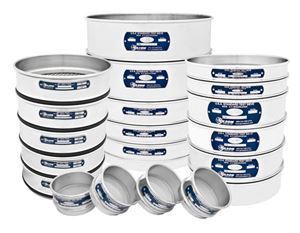
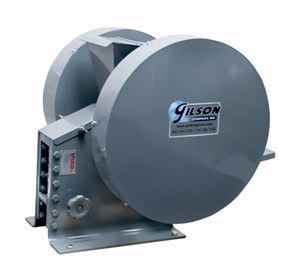
If wet sieving is required, a single Gilson Testing Screen Tray is often used. A wooden frame can be built to allow a back-and-forth screening action of the tray with recovery of the usable sample in a container below. The entire concrete sample should be passed over the designated sieve, and the retained particles should be discarded without wiping off the adhered mortar. After sieving, the sample should be remixed with a shovel, and testing should proceed immediately.
What Testing Equipment is Needed?
The conventional apparatus required to determine slump, temperature, air content, unit weight, and other specified fresh concrete tests will be necessary. A properly sized sieve or Screen Tray must be included if mixes with over-sized aggregate are used.
Additional pieces of field kit that optimize efficient concrete sampling and handling are a wheelbarrow with about 6ft³ (170L) capacity and a short-handle shovel for remixing the sample portions before testing. Optional items include a sponge and a sturdy brush for cleanup. A 5gal (19L) bucket is handy for collecting sample portions or washing water, and a moist burlap cloth protects your sample on a hot, sunny day.
Setting Up for Concrete Field Testing
Unless otherwise stated in the project specifications, concrete for acceptance testing is sampled “at the point of discharge from the transportation unit” to ensure that the mix delivered to the job site is what was ordered by the purchaser.
Select a location for performing fresh concrete tests and molding strength specimens near where the samples are collected but away from foot and equipment traffic patterns. An ideal testing location provides a flat and level work area to position testing equipment. The location should also be at or near the site where the strength samples are stored for initial curing.
Tracking the Test Times
ASTM C94/AASHTO M 157 specifications require tests for slump or slump flow, air content, density, and temperature to be performed each time a set of strength test specimens is molded. Any of these tests can be performed independently during placement as needed to monitor the consistency and quality of the concrete.
ASTM/AASHTO Requirements for Concrete Acceptance Testing
| Test | ASTM | AASHTO | Test Purpose |
|---|---|---|---|
| Temperature | C1064 | T 309 | Determines the temperature of freshly mixed concrete. |
| Slump | C143 | T 119 | A workability test for conventional concrete mixes. |
| Slump Flow | C1611 | T 347 | A flow test for self-consolidating concrete (SCC) mixes. |
| Air Content, Pressure Method | C231 | T 152 | A test for concrete air content using Type A or B pressure meters. |
| Density (Unit Weight) and Yield | C138 | T 121 | Determines density, yield, and gravimetric air content of concrete mixes. |
| Flexural Beam or Cylindrical Strength Specimens | C31 | R 100 | Specifies requirements for molding strength-test specimens. |
An elapsed time of 15 minutes is permitted between collection of the first and final portions of the composite sample. After the sample portions are moved to the testing location, the composite concrete sample is mixed the minimum amount necessary to ensure uniformity before tests can begin.
Elapsed Time Targets
⇓
⇓
⇓
Organizing Testing for Better Workflow
Although the time constraints noted in the test methods seem intimidating, it is actually not difficult to complete the fresh concrete tests and mold the strength specimens well within the allotted time. Selecting a testing area near the sampling site and setting up the test equipment and cylinder or beam molds within easy reach helps with efficient workflow.
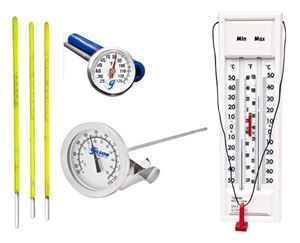
- The temperature test only requires inserting the thermometer probe into the freshly mixed sample. Ensure the thermometer probe is surrounded by 3in (75mm) of concrete on all sides. The reading is completed in 2 to 5 minutes.
- The slump or slump flow tests can be started while temperature measurement is underway. Either test must be completed without interruption within 2-1/2 minutes.
- The sample consolidation phase for both the air content and density/yield tests can be run concurrently. The measuring bowl for the concrete pressure meter meets the same requirements as the unit measure for the density test. Filling, consolidation, and strike-off procedures are the same for both tests. After consolidation, strike-off, and weighing are completed, the cover assembly for the air meter is clamped in place, and the remainder of the test for air content is initiated.
- Casting, consolidation and finishing of the strength test specimens should begin within 15 minutes after collecting the sample. This allows ample time to complete the other fresh concrete tests. Once the cylinder or beam specimens are complete, another 15 minutes is allotted to locate the strength samples in a curing box or other protected area.
We hope this article has presented some ideas for concrete sampling and efficient field testing that might help your field-testing practices. Please contact the testing experts at Gilson to discuss your applications.
Additional Resources
Gilson Blogs
- Concrete Slump Testing: Test Methods, Equipment, and Testing Techniques
- Concrete Cylinder Testing - From the Field to the Lab
- Concrete Air Testing: Why, When, & How: An In-Depth Look
- The Gray Pages: ASTM’s How-To for Concrete and Aggregates Testing
- What is Workability of Concrete?
- Why Complete Testing of Fresh Concrete Matters
- 4 Important Steps to Reliable Concrete Test Cylinder Samples
Gilson Videos
Gilson Is Here to Help
Contact our testing experts for more information or to discuss your testing application.
Testing Resources
Standard Test Methods, Specifications, and Practices
Individual test methods and specifications referenced in our product descriptions, blog articles, and videos are available for review or purchase from the professional organizations noted.
- ASTM International (American Society for Testing and Materials)
- AASHTO (American Association of State Highway and Transportation Officials)
- ACI (American Concrete Institute)
- State DOTs (Departments of Transportation)
- ISO (International Organization for Standardization)
- BS (British Standards)
- EN (European Standards)