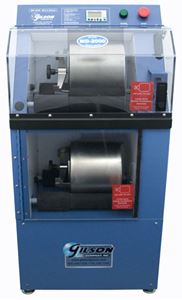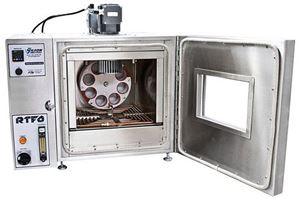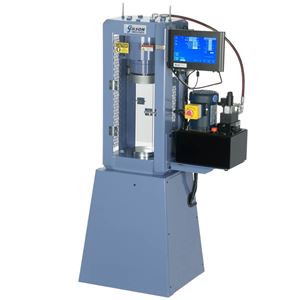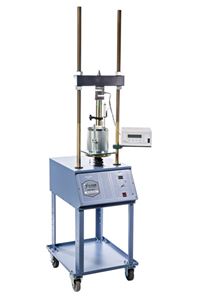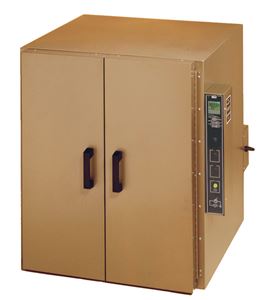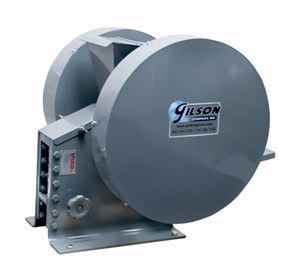
The Sand Equivalent Test indicates the relative portion of undesirable clay-like fines and dusts that occur in granular soils and fine aggregates passing the No. 4 sieve. The Sand Equivalent Shaker is also used in the Durability Index Test which measures the relative resistance of an aggregate to producing such undesirable clay-like fines when subjected to degradation. In either application, the sample to be tested is placed in special solution of calcium chloride, formaldehyde, and glycerine. After shaking the cylinder with a Sand Equivalent Shaker, it is allowed to stand for a 20-minute sedimentation period. Readings are then taken on the cylinder scale for the level of the top of the clay suspension, and for the sand level. The "Sand Equivalent" is the sand reading divided by the clay reading x 100.
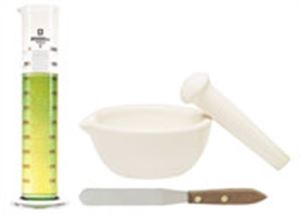
Plastic measuring cylinders are 17" high, 1-1/4" (31.8mm) inside diam., and are graduated from 0 to 15" (0 to 381mm) by 0.1" graduations from bottom of cylinder. Measuring tin is approximately 2-1/4" (57mm) diam. with capacity of 85ml. Weighted foot assembly weighs 1000g.